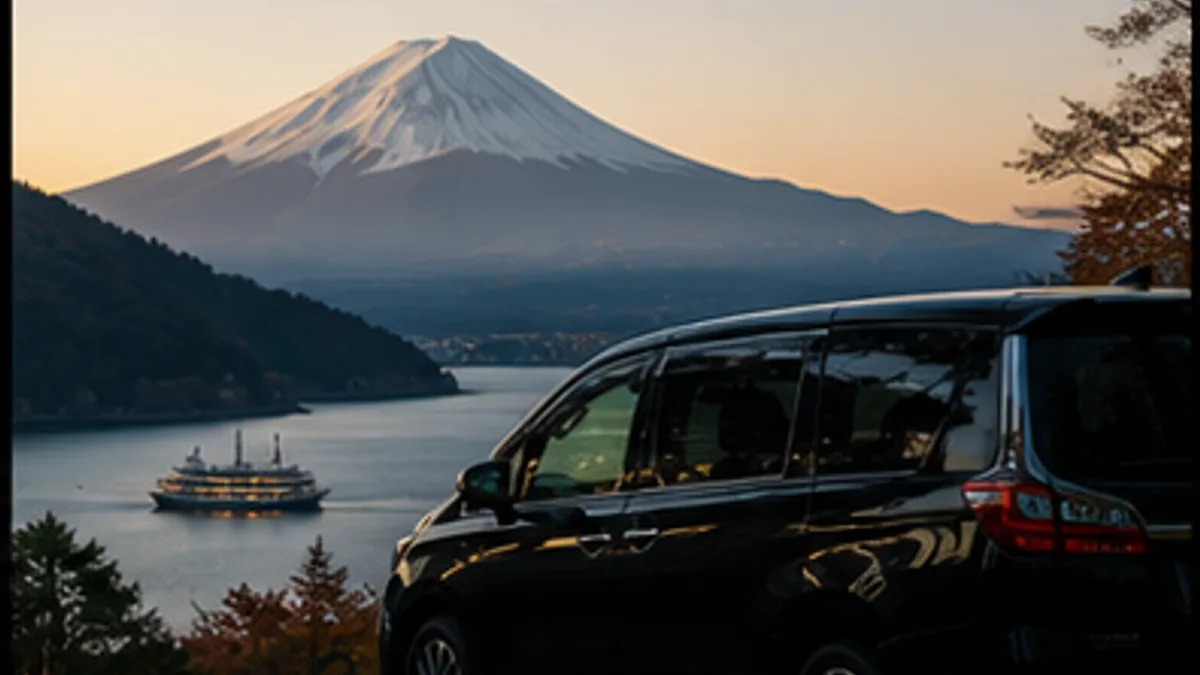
Mt. Fuji and Hakone
The Fuji-Hakone route is designed around weather windows, lake viewpoints, private onsen ryokan access, and a comfortable return to Tokyo.
Best season: November-February for clear Fuji views
Proof checked before the day starts
Licensed green-plate vehicle We confirm the legal green-plate vehicle scope required for paid passenger service before the itinerary is fixed.
Commercial passenger insurance Commercial passenger insurance and driver qualification checks are tied to the same operating support process.
Transparent day rate JPY 60,000/10h The base day rate starts at JPY 60,000/10h; the price table below lists inclusions and exclusions before any conversation.
24-hour operating contact A 24-hour operating contact remains available for incident escalation, timing changes, and privacy-sensitive adjustments.
Kanto
Fuji-Hakone private route
Hotel-based route fit: choose Tokyo, Lake Kawaguchi, or Hakone as the anchor before deciding whether the day is a clear-view Fuji run, a ryokan arrival, or a Tokyo return.
Not a catalog day: the driver-guide reads cloud cover, lake wind, ropeway status, lunch position, and ryokan dinner timing before locking the order.
A high-end Fuji-Hakone day protects the best visibility window first, then shifts into art, shrine, lake, or onsen-country rhythm without overloading distance.
Tell us the hotel, date, whether you sleep in Hakone or return to Tokyo, luggage volume, mobility limits, and how important a Fuji view is versus onsen or art.
Seasonal and access boundaries
Fuji visibility and lake weather
- Planning window
- Discuss the route 1-3 months ahead, then make the first-viewpoint decision close to the travel date.
- Can assist
- We can build a morning-first Lake Kawaguchi plan and keep Hakone art or forest options ready.
- Depends on availability
- Cloud cover, lake wind, road conditions, parking, and guest hotel direction decide the first stop.
- Cannot promise
- Cannot promise a clear summit view, reflection photo, sunrise color, or fixed viewpoint order.
- Fallback plan
- Fallback plan: shift into museums, forest roads, tea, craft villages, or a shorter lake loop when visibility drops.
- Cost and inclusion boundary
- Viewpoint changes do not include attraction tickets, paid seats, meals, or third-party activity charges unless separately confirmed.
- Update cadence
- Re-check weather, cloud movement, and road conditions during planning and again just before departure.
- Request brief
- Share hotel base, Fuji priority level, motion tolerance, luggage, children, and whether the day returns to Tokyo.
Ryokan dinner and onsen arrival rhythm
- Planning window
- Discuss ryokan days before the route is fixed; dinner and arrival time should shape the sightseeing count.
- Can assist
- We can protect check-in, luggage handoff, and calm arrival by reducing late afternoon stops.
- Depends on availability
- Dinner time, room readiness, private bath requests, road conditions, and parking rules belong to the property and route day.
- Cannot promise
- Cannot promise room timing, bath access, special meal changes, or late arrival acceptance inside the car route.
- Fallback plan
- Fallback plan: shorten Lake Ashi or museum time, skip shopping, and arrive at the ryokan with a better buffer.
- Cost and inclusion boundary
- Ryokan rooms, meals, bath options, luggage delivery, and cancellation terms are property matters unless separately confirmed.
- Update cadence
- Re-check ryokan timing when the property confirms and again before the driver route is finalized.
- Request brief
- Share ryokan name, dinner time, luggage count, food constraints, bath priorities, and latest arrival limit.
Ropeway, shrine, and mountain-road operations
- Planning window
- Discuss one month ahead, then re-check status and weather again shortly before departure.
- Can assist
- We can plan around Hakone Shrine, Lake Ashi, ropeway alternatives, and museum stops without making one closed item break the day.
- Depends on availability
- Wind, volcanic alerts, road work, shrine crowds, and parking restrictions can change access.
- Cannot promise
- Cannot promise ropeway operation, shrine quietness, parking at the closest point, or no mountain traffic.
- Fallback plan
- Fallback plan: choose Pola Museum, Open-Air Museum, a lakeside tea stop, or a lower-road scenic loop.
- Cost and inclusion boundary
- Ropeway, museum, shrine, parking, and paid activity costs are outside the base car route unless itemized.
- Update cadence
- Re-check operations and weather shortly before the trip and on the morning of the route.
- Request brief
- Share shrine priority, walking tolerance, weather comfort, luggage, and whether shopping should be removed if time tightens.
Why a private car changes the day
Less transfer stress
A private car solves the parts of a Japan day that usually become stressful: station transfers, luggage, weather, dining windows, and the return journey.
More meaningful time on site
The day is not packed with stops. Parking, walking, photos, lunch, and rest are counted so each visit has room to breathe.
Clear boundaries before confirmation
Vehicle time, inclusions, unrealistic requests, and weather alternatives are explained before the day is confirmed.
Why this destination needs a private car
Fuji and Hakone need private routing because weather, lake visibility, museum timing, onsen check-in, and return traffic can change the best order by the hour. The route should preserve the Fuji viewing window first, then shift into Hakone art and ryokan rhythm.
A private day, sequenced by time
07:30
Tokyo departure with weather check
Leave early from central Tokyo and confirm the first viewpoint against cloud cover before committing to the north-shore or Hakone order.
09:30
Lake Kawaguchi view sequence
Use Oishi Park, the lake road, or a quieter viewpoint depending on visibility and guest mobility.
11:00
Fuji foothill village or shrine stop
Add Oshino Hakkai, Arakurayama Sengen Park, or a smaller shrine only when traffic and stair tolerance fit the day.
12:30
Lunch positioned for the mountain road
Avoid a lunch location that forces backtracking; the car should keep the route moving toward Hakone or Gotemba.
14:30
Hakone art or Lake Ashi
Choose the Open-Air Museum, Pola Museum, Hakone Shrine, or Lake Ashi according to weather and ryokan check-in time.
17:00
Ryokan arrival or Tokyo return
Finish with a calm ryokan arrival before dinner, or return to Tokyo after confirming expressway conditions.
Season and crowd strategy
November to February usually gives the clearest Fuji visibility, with cold mornings but better long-distance views.
Cherry blossom and autumn weekends need a stricter start time because lake roads and shrine access can slow sharply.
Summer should be treated as a lake, forest, and museum route because the summit view is less reliable in humidity.
How we avoid the pressure points
Do Arakurayama Sengen Park only early and only when the stairs fit the guest profile.
Keep Gotemba as an optional logistics stop, not the heart of the route, unless shopping is the stated purpose.
Avoid stacking Lake Kawaguchi, Hakone Shrine, and multiple museums into one day without removing at least one viewpoint.
Our routes
Lake Kawaguchi and Fuji viewpoints
Builds the day around Fuji visibility windows, moving Lake Kawaguchi and Arakurayama Sengen Park earlier or later instead of locking the route to one fixed order.
- -Oishi Park
- -Lake Kawaguchi
- -Arakurayama Sengen Park
Hakone art and onsen
Balances Lake Ashi, Hakone Shrine, and the Open-Air Museum with onsen-country pacing so the day feels like a retreat rather than a long transfer.
- -Lake Ashi
- -Hakone Shrine
- -Open-Air Museum
Fuji foothills craft villages
Keeps Oshino Hakkai, Saiko Iyashi no Sato, Mishima Skywalk, and Gotemba as weather-aware foothill stops for craft, village scenery, and a flexible return.
- -Oshino Hakkai
- -Saiko Iyashi no Sato
- -Mishima Skywalk
- -Gotemba
The route can stay private without becoming vague
Share your hotel, timing, and non-negotiables now; we will turn this outline into one private day with the right driver-guide, vehicle, and pacing.
Tell us your dates and preferencesStay here
Hotel-route fit matrix
Hoshinoya Fuji
JPY 110,000-220,000/night during clear Fuji, foliage, and holiday windows- Hotel anchor
- Hoshinoya Fuji and the Lake Kawaguchi north-shore base.
- Guest fit
- Best for couples or families who want the Fuji viewing window to shape the day instead of forcing a fixed loop.
- Route axis
- Lake Kawaguchi views, Oishi Park, optional shrine or village stop, then a calm resort-side finish.
- Why it fits
- Staying on the lake side lets the driver-guide protect the clearest morning window and remove Hakone distance when clouds move in.
- Time and distance
- North-shore viewpoints stay close; Hakone or Gotemba should be treated as an extension rather than the default.
- Season boundary
- Fuji visibility is never guaranteed. Winter is usually clearer; humid summer days need lake, forest, and museum alternatives.
- Vehicle and luggage
- Alphard works well for 2-5 guests with resort luggage; Lexus LS500h fits a quiet couple route with lighter bags.
- Request brief
- Share hotel status, arrival direction, preferred Fuji priority, luggage, child seats, and whether the day should finish lakeside or continue to Tokyo.
- Reference price tier
- Reference stay level from JPY 90,000/night; weather, rooms, dining, and activity seats are verified separately.
Gora Kadan
JPY 140,000-320,000/night during foliage, sakura, and holiday windows- Hotel anchor
- Gora Kadan and the Hakone Gora onsen-ryokan base.
- Guest fit
- Best for guests who value onsen rhythm, privacy, and art stops more than adding every Fuji viewpoint.
- Route axis
- Gora, Open-Air Museum, Pola Museum, Lake Ashi, and Hakone Shrine only when weather and dinner timing allow.
- Why it fits
- The ryokan anchor prevents the day from running late and keeps museum, lake, and shrine choices inside a realistic arrival window.
- Time and distance
- Gora and museum stops are close; Lake Ashi requires road and parking checks before it becomes part of the day.
- Season boundary
- Autumn and holiday weekends need fewer stops because mountain roads and parking pressure can break the dinner arrival.
- Vehicle and luggage
- Alphard is the balanced choice for mountain roads, luggage, and rear-seat comfort; HiAce is only for larger parties.
- Request brief
- Share ryokan dinner time, luggage count, onsen arrival priority, museum interests, and whether Fuji views are essential or secondary.
- Reference price tier
- Reference stay level from JPY 150,000/night; ryokan dinner, room type, and bath preferences are not bundled into the car plan.
Hakone Retreat
JPY 55,000-130,000/night during foliage, holiday, and onsen peak dates- Hotel anchor
- Hakone Retreat and the Sengokuhara forest-museum base.
- Guest fit
- Best for design-minded guests who prefer forest air, museums, and flexible weather handling.
- Route axis
- Sengokuhara, Pola Museum, Open-Air Museum, Lake Ashi if clear, and Gotemba only when shopping is the stated purpose.
- Why it fits
- The base shortens museum transfers and makes rain or fog easier to absorb without sending the car across both Fuji and Hakone in one sweep.
- Time and distance
- Museum stops stay compact; Tokyo return timing should be checked before adding lake, shrine, and shopping together.
- Season boundary
- Fog, rain, and ropeway conditions can change the best order; the route should keep one indoor art fallback ready.
- Vehicle and luggage
- Alphard handles 2-5 guests and luggage comfortably; Crown or Lexus LS500h works when the group is small and bags are light.
- Request brief
- Share museum preferences, Tokyo return need, luggage, walking tolerance, and whether shopping should be included or avoided.
- Reference price tier
- Reference stay level from JPY 45,000/night; this is a quiet forest anchor, not a simplified hotel deal.
Hoshinoya Fuji
JPY 110,000-220,000/night during clear Fuji, foliage, and holiday windowsBest when the trip is built around Lake Kawaguchi views and a slower Fuji-side evening.
Booking window: Plan 2-4 months ahead; earlier for autumn foliage and holiday nights.
Gora Kadan
JPY 140,000-320,000/night during foliage, sakura, and holiday windowsThe strongest Hakone ryokan anchor when dinner, onsen, and privacy are more important than adding stops.
Booking window: Plan 3-6 months ahead; peak weekends can close quickly after inventory opens.
Hakone Retreat
JPY 55,000-130,000/night during foliage, holiday, and onsen peak datesA forest and museum-friendly base for guests who prefer contemporary calm over formal ryokan ceremony.
Booking window: Plan 1-3 months ahead; confirm room category before fixing museum timing.
Hoshinoya Fuji
Official hotel siteJPY 110,000-220,000/night during clear Fuji, foliage, and holiday windows
Price reference valid until: 2026-09
Fuji-facing cabins and a quiet resort rhythm near Lake Kawaguchi.
- Station
- Kawaguchiko Station, about 15-25 min by private car
- Spot
- Lake Kawaguchi viewpoints, about 5-15 min by private car
- Airport
- Haneda Airport, about 130-170 min by private car
- Children
- Hoshinoya Fuji family suitability, bedding, and connecting-room options are confirmed before quotation.
- Pets
- Hoshinoya Fuji pet policy is confirmed directly with the property before booking.
- Rating
- 4.5 · Rating source: Hoshinoya Fuji official resort listing, Google Maps, Booking.com, Agoda, and Ikkyu/Jalan public review references; verified during inquiry.
Gora Kadan
Official hotel siteJPY 140,000-320,000/night during foliage, sakura, and holiday windows
Price reference valid until: 2026-09
One of Hakone’s most established luxury ryokan stays.
- Station
- Gora Station, about 5 min by private car
- Spot
- Hakone Gora Park, about 5-10 min by private car
- Airport
- Haneda Airport, about 110-150 min by private car
- Children
- Gora Kadan family suitability, bedding, and connecting-room options are confirmed before quotation.
- Pets
- Gora Kadan pet policy is confirmed directly with the property before booking.
- Rating
- 4.6 · Rating source: Gora Kadan official ryokan or temple lodging listing, Google Maps, Ikkyu, and Jalan public review references; verified during inquiry.
Hakone Retreat
Official hotel siteJPY 55,000-130,000/night during foliage, holiday, and onsen peak dates
Price reference valid until: 2026-09
Forest setting with modern rooms and easy access to Hakone museums.
- Station
- Gora Station, about 15-25 min by private car
- Spot
- Pola Museum of Art, about 10-15 min by private car
- Airport
- Haneda Airport, about 115-155 min by private car
- Children
- Hakone Retreat family suitability, bedding, and connecting-room options are confirmed before quotation.
- Pets
- Hakone Retreat pet policy is confirmed directly with the property before booking.
- Rating
- 4.4 · Rating source: Hakone Retreat official resort listing, Google Maps, Booking.com, Agoda, and Ikkyu/Jalan public review references; verified during inquiry.
Your driver-guide for the day
How the driver-guide runs the day
For Fuji-Hakone, the driver-guide starts the day by reading cloud cover, expressway conditions, lake wind, ropeway status, and the guest hotel position. The car becomes the control point between viewpoints, lunch, art, and onsen-town stops, so the route can shift without turning a clear morning into a long wait or a misty afternoon into wasted distance.
Alphard
Best for 2-5 guests who need a calm cabin for the longer highway approach and mountain transfers.
Comfortable for two large suitcases and smaller day bags when the day links Tokyo, Hakone, or a ryokan stay.
The Alphard is the most balanced Fuji-Hakone choice because it gives premium rear-seat comfort, flexible seating, and enough luggage room for a mountain route where weather and hotel arrival timing often change.
Day-of focus
- Use the morning for the clearest Fuji or lake window before moving into slower Hakone stops.
- Watch ropeway, toll road, parking, and hotel arrival conditions so mountain logistics stay controlled.
- Keep a rain and fog alternative ready, usually art, ryokan lunch, lakeside tea, or a shorter scenic loop.
Vehicle and service assurance
- Licensed green-plate vehicle assignment, second-class license scope, commercial passenger insurance, and driver qualification checks are completed before confirmation.
- The driver-guide confirms hotel arrival timing, parking constraints, toll choices, and route alternatives before the day starts.
- A 24-hour operating contact remains available for incident escalation, timing changes, or privacy-sensitive adjustments during the route.
When we change the route
- Fuji visibility cannot be guaranteed; the day needs a second route that still feels complete without the mountain view.
- Tokyo same-day returns can be affected by evening expressway traffic, especially on weekends and holidays.
- Ryokan dinner times are strict; late sightseeing can damage the stay experience.
Planning signals we watch
- P0 priorityMaster Prompt v6.0 names Fuji-Hakone as a P0 destination and the research report places Tokyo to Fuji-Hakone among the highest-demand routes.
- World HeritageThe research report identifies Mt. Fuji as an S-level World Heritage anchor reachable from Tokyo in one day.
- Ryokan scarcityThe hotel strategy follows the report emphasis on Gora Kadan and other scarce ryokan windows during peak seasons.
Transparent pricing
| Vehicle | Guests | Luggage | Day rate |
|---|---|---|---|
| Crown | 1-3 guests | 1 large suitcase | JPY 60,000/10h |
| Alphard | 1-4 guests | 2 large suitcases | JPY 68,000/10h |
| Vellfire | 1-4 guests | 2 large suitcases | JPY 68,000/10h |
| HiAce Grand Cabin | 5-8 guests | 6 large suitcases | JPY 85,000/10h |
| Lexus LS500h | 1-3 guests | 1 large suitcase | JPY 120,000/10h |
Includes
- +Licensed private vehicle
- +Driver-guide coordination
- +Second-class license and green-plate verification
- +Commercial passenger insurance check
- +Fuel, tolls, and parking
- +Flight-delay monitoring for airport pickup
- +Child-seat request check
- +Hotel pickup and drop-off
- +Route planning by WhatsApp
- +24-hour emergency contact
Excludes
- -Meals
- -Admission tickets
- -Accommodation
- -Confirmed plan includes a 30-minute operating buffer; beyond the buffer JPY 5,000/hour applies